Rembrandt's Leiden
Rembrandt Harmenszoon van Rijn was born on the Weddesteeg in 1606, the son of a miller, and worked here until he was 25. The Young Rembrandt Studio, the Latin School he attended on the Lokhorststraat and the corner where his father's mill stood are all within a few hundred metres of each other.
The Pilgrim Fathers
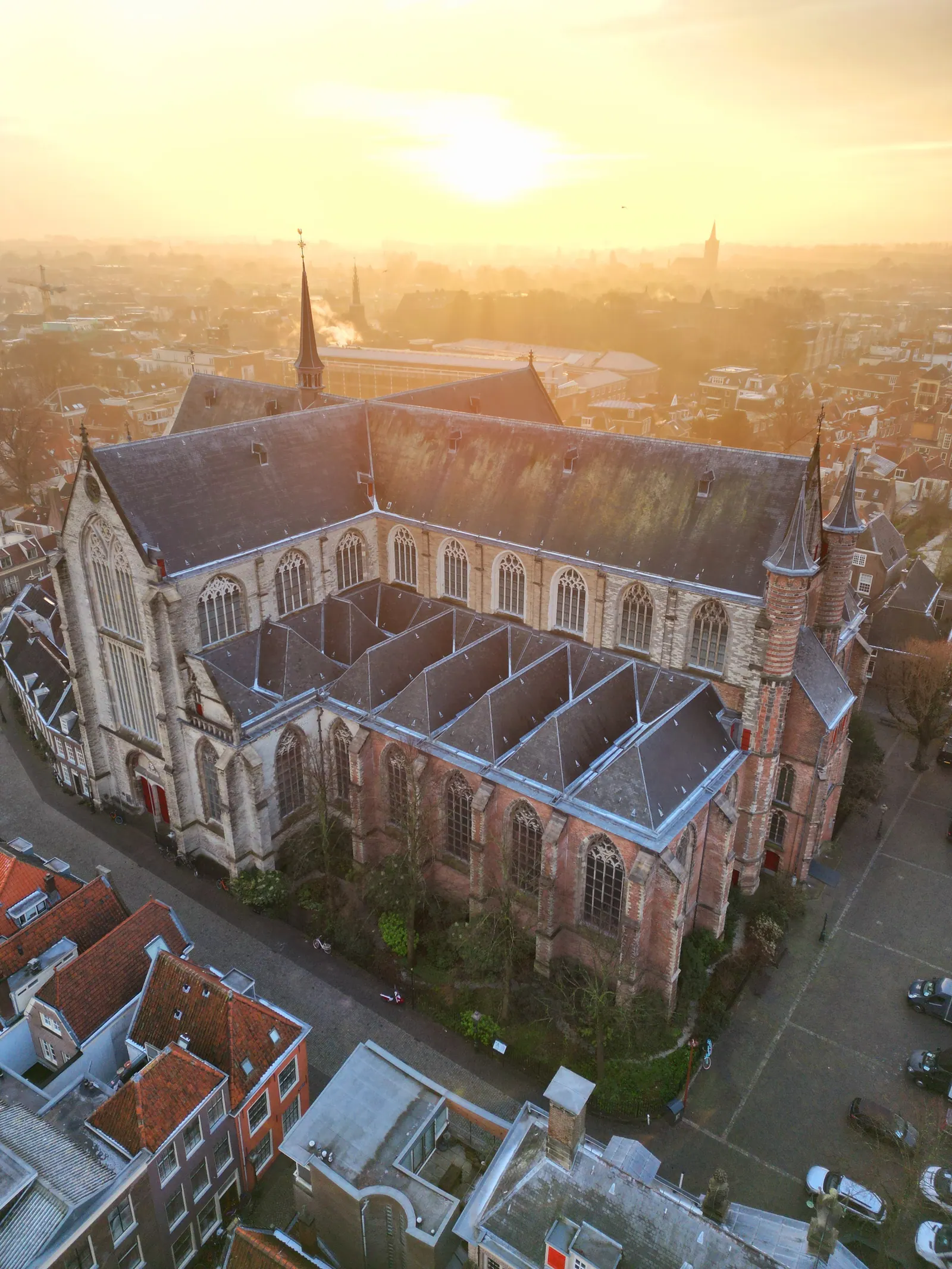
Between 1609 and 1620 a congregation of English Separatists led by John Robinson lived around the Pieterskerk. Their leader is buried there; the Pilgrim Archives on the Boisotkade and the American Pilgrim Museum in one of the city's oldest houses let visitors trace family lines back to Leyden.
Siege, relief and 3 October
- 1574: Leiden holds out against the Spanish and is relieved on 3 October.
- 1575: William of Orange rewards the city with the country's first university.
- Every 3 October the whole city still eats herring and white bread at a giant street festival.
- The Burcht, the Pieterskerk and the Lakenhal museum tell the story in situ.